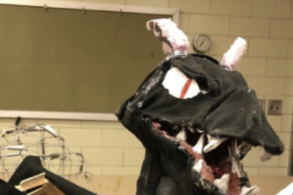
Ert the Dragon
(2022)
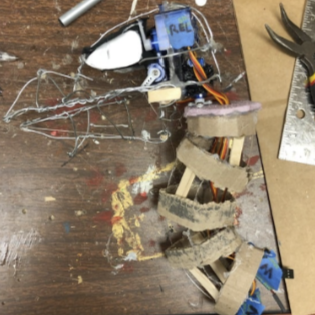
Skeleton structure of Ert the dragon animatronic
Ert was constructed using metal wire, popsicle sticks, carboard, small foam pieces, and t-shirt cloth. The tail section and the upper torso were split into two sections and connected by a pulley system so when Ert was awakened, the tail would move into the cave and the body would move outwards, making the illusion of one big figure. In total, Ert had 5 functions; his neck yaw, mouth, both eyelids roll (blinking function), and tail wag, all controlled using servos and an Arduino Uno.
While I am proud with the functionality of Ert, due to the restrictions of the competition the materials I used for construction had to be found with everyday objects, making his structure very fragile. At the end of the project, I learned how important material choice can be and how to manage space for components like wires, power sources, and overall show space.
Ert mounted to and interacting with the rest of the Rube Goldberg machine days before competition
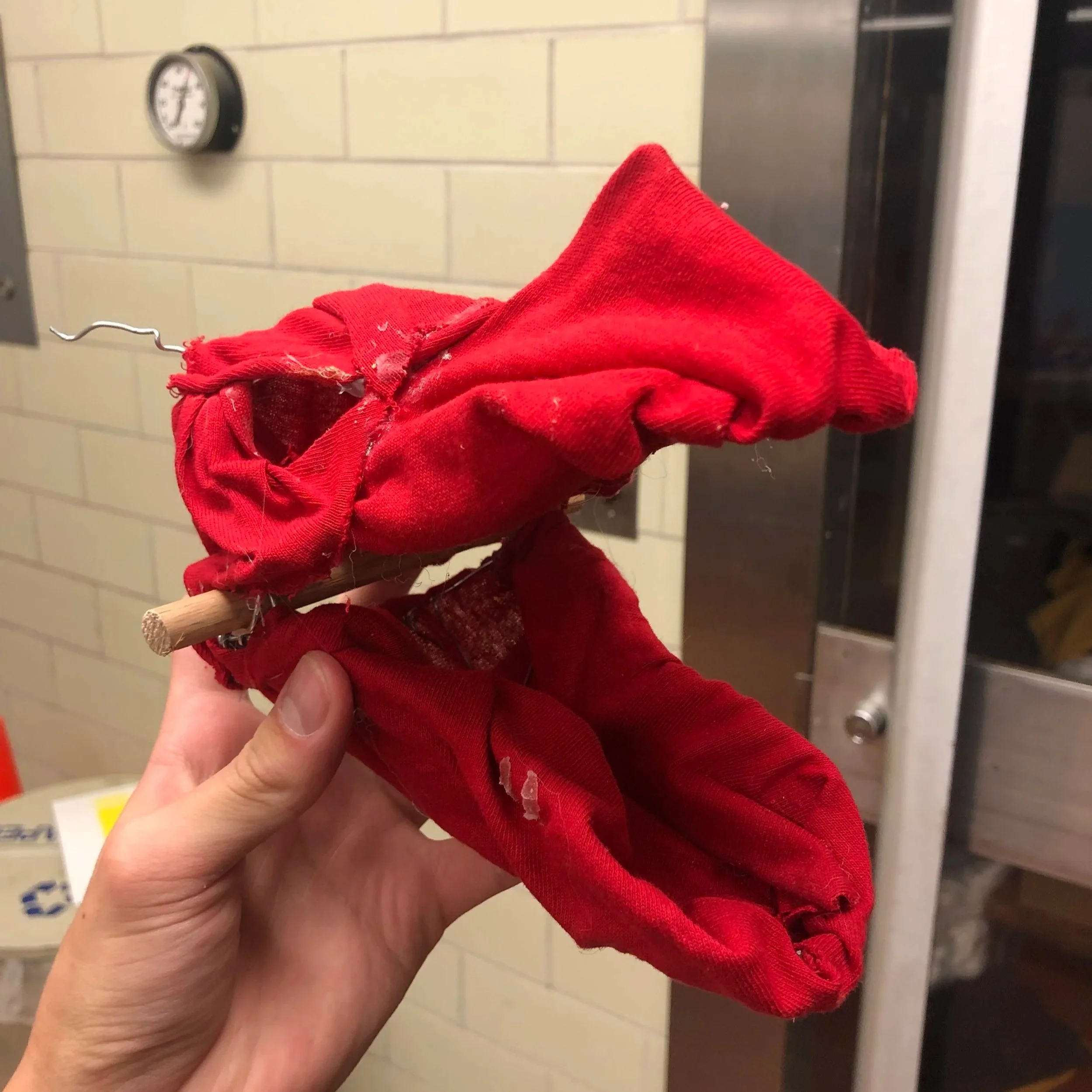
Early wire structure and fabric skin tests of head and jaw mobility
As a quick overarching synopsis, Rube Goldberg was a cartoon artist that illustrated overly complex machines utilizing everyday objects to complete a simple everyday task. Between 2020 and 2024 I was a member of the Boilermaker Rube Goldberg Team (BRGT), which is a small group of students that builds physically builds elaborately intricate and themed Rube Goldberg machines for a national collegiate competition every year.
For the 2022 competition the team decided to make a machine themed around Vikings and dragons to complete the given final task of putting a hat on a head. For this machine, one of the steps I designed an animatronic dragon the team named Ert. I took inspiration from Rube Goldberg cartoons that included animals interacting with elements of the machine, which led to a falling fishing basket waking Ert from his slumber, jumping out of his cave, and feasting on a nearby fish.